
Shopping Cart
There are no more items in your cart
 Español
 English
 Português PT
 Français
 Italiano
 Deutsch
 اللغة العربية
In summary: The case with magnetic dust filters suits users looking for quick maintenance without removing panels in under 10 s, whilst the standard filter with mechanical fixing or a sliding tray is best at the bottom of the chassis to protect ATX power supplies with a rigid mount.
Table of contents
- What structural difference is there between magnetic and standard filters?
- How does the filter type affect CFM airflow and static pressure?
- Which one is easier to clean during routine maintenance?
- Technical comparison table
- Which case to choose depending on the ventilation setup?
- Common mistakes when buying cases with dust filters
- FAQs
- Technical verdict
What structural difference is there between magnetic and standard filters?
A magnetic dust filter consists of a fine mesh of PVC or nylon heat-sealed onto a flexible magnetic strip between 0.5 mm and 1 mm thick. It attaches directly onto steel surfaces through magnetic attraction, covering top or front grilles without the need for clips or screws.
The standard or conventional filter uses a rigid plastic frame with snap-in tabs, sliding rails or M3 screws fastened directly to the chassis. This system is frequently located at the bottom of the case to protect the air intake of the power supply, where the chassis usually features punched steel guides of 120 mm to 140 mm.
Magnetic filter: [PVC / Nylon mesh] + [0.8 mm flexible magnetic strip] -> Instant external fixing
Standard filter: [Rigid mesh] + [Frame with rails or mechanical clips] -> Internal / guided fixing
How does the filter type affect CFM airflow and static pressure?
Any mesh placed in the air intake creates a resistance that reduces airflow measured in CFM (cubic feet per minute) by between 15% and 35%, requiring fans with sufficient static pressure measured in mmH2O.
- 120 mm vs 140 mm fans: A 140 mm fan moves a larger volume of air at a lower rotational speed than a 120 mm one, cutting noise by around 3 dBA to 5 dBA under the same mesh restriction.
- Static pressure required: To push air through dense filters with pores smaller than 0.5 mm, fans with at least 1.5 mmH2O of static pressure are recommended; otherwise, effective airflow drops by more than 40%.
- Acoustic impact of accumulated dust: A 1 mm layer of dust on the filter raises the internal temperature between 4 °C and 8 °C, forcing the fans to ramp up from 1,000 RPM to 1,600 RPM, which increases the noise level by more than 6 dBA.
Which one is easier to clean during routine maintenance?
Intervention time determines hardware longevity. The build-up of particles on heatsinks and power supplies with 80 PLUS certification, such as the high-efficiency Radix range, reduces heat transfer and shortens the lifespan of the capacitors from around 2 years of continuous use onwards.
- Magnetic filters: They come off in 2 s by pulling a corner, can be rinsed under the tap with warm water below 40 °C, dried with a cloth in 30 s and put back in place by direct contact.
- Standard clip or screw filters: They require removing side panels or tilting the tower to release the lower rails, taking between 3 min and 5 min per maintenance cycle.
Technical comparison table
| Criterion | Magnetic filters | Standard filters (clip / rail / screw) |
|---|---|---|
| Removal time | 2 s to 5 s, no tools needed | 30 s to 300 s (may require a screwdriver) |
| Panel compatibility | Only chassis with steel panels | Universal (steel, aluminium and plastic) |
| Airflow resistance | 15% to 25% restriction (depending on mesh density) | 20% to 35% restriction (thicker plastic frame) |
| Perimeter sealing | Continuous thanks to 0.8 mm magnetic attraction | Variable (possible 1 mm to 2 mm gaps in the rails) |
| Optimal location | Top and front panel | Bottom panel (ATX PSU area) |
| Estimated lifespan | 5 to 8 years (thermal degradation of the magnet above 60 °C) | 3 to 5 years (plastic tabs may snap) |
| Recommended minimum static pressure | 1.2 mmH2O | 1.5 mmH2O |
Which case to choose depending on the ventilation setup?
The arrangement of the fans and the chassis format determine whether it is best to prioritise top magnetic filters or mechanically protected intakes. The Tacens catalogue offers options for different configurations:
Recommended positive pressure flow: Front intake (3x 120 mm) > Rear exhaust (1x 120 mm)
Airflow calculation: 3 × 45 CFM (Intake) - 1 × 45 CFM (Exhaust) = +90 CFM of internal overpressure
- Mid-tower 2SAGITTA20W (3.91 Kg, 450x190x340 mm): Accommodates 2x 120 mm or 2x 140 mm at the top, 2x 120 mm at the bottom and 1x 120 mm at the rear. The 140 mm top space is ideal for quick-release magnetic filters, plus front ports including USB 3.0 x1, USB 2.0 x1 and USB-C x1.
- Mid-tower IMPERATORII (2,690 g, 378x428x193 mm): Accommodates up to 5x 120 mm of ventilation and ATX PS/3 or ATX PS/2 power supplies, with internal bays for 2x 3.5" HDDs and 2x 2.5" SSDs.
- Mid-tower 2AERO (3.02 Kg, 342x186x414 mm): Capacity for 3x 120 mm fans at the front and 1x 120 mm at the rear, ideal for creating positive pressure that expels dust through the unfiltered gaps.
- Mini-tower 2AEROM (2.7 Kg, 330x189x380 mm): Compact format with front support for 3x 120 mm fans and 1x 120 mm at the rear, compatible with 1x 3.5" HDD and 3x 2.5" SSDs.
- Mini-tower FORTISII (2.73 Kg, 384x185x320 mm): Includes a carry handle, a 1x 120 mm front fan and a 1x 120 mm rear fan with support for a standard ATX power supply.
- Mini-tower NOVAX550BR (3,437 g, 356x166x275 mm): Compact chassis geared towards basic integration with a 1x 80 mm rear fan and capacity for 2x 3.5" HDDs plus 2x 2.5" SSDs.
Common mistakes when buying cases with dust filters
- Fitting fans without static pressure on filtered panels: Installing fans designed purely for high airflow (high CFM but under 0.8 mmH2O) cuts real airflow by more than 50% when the air hits the mesh.
- Running negative pressure in the chassis: If the exhaust fans remove more air than the filtered intakes bring in (for example, 120 CFM out versus 50 CFM in), the chassis sucks dust in through every PCIe slot and unfiltered seam.
- Cleaning magnetic filters with boiling water: Magnetic strips lose their magnetic properties at temperatures above 70 °C and the PVC mesh deforms easily.
- Forgetting the power supply filter: High-efficiency power supplies, such as the 80 PLUS Gold certified models in the Radix range, need a constant flow of clean air; leaving the bottom filter uncleaned for 6 months raises the PSU's internal temperature by more than 10 °C.
Products mentioned
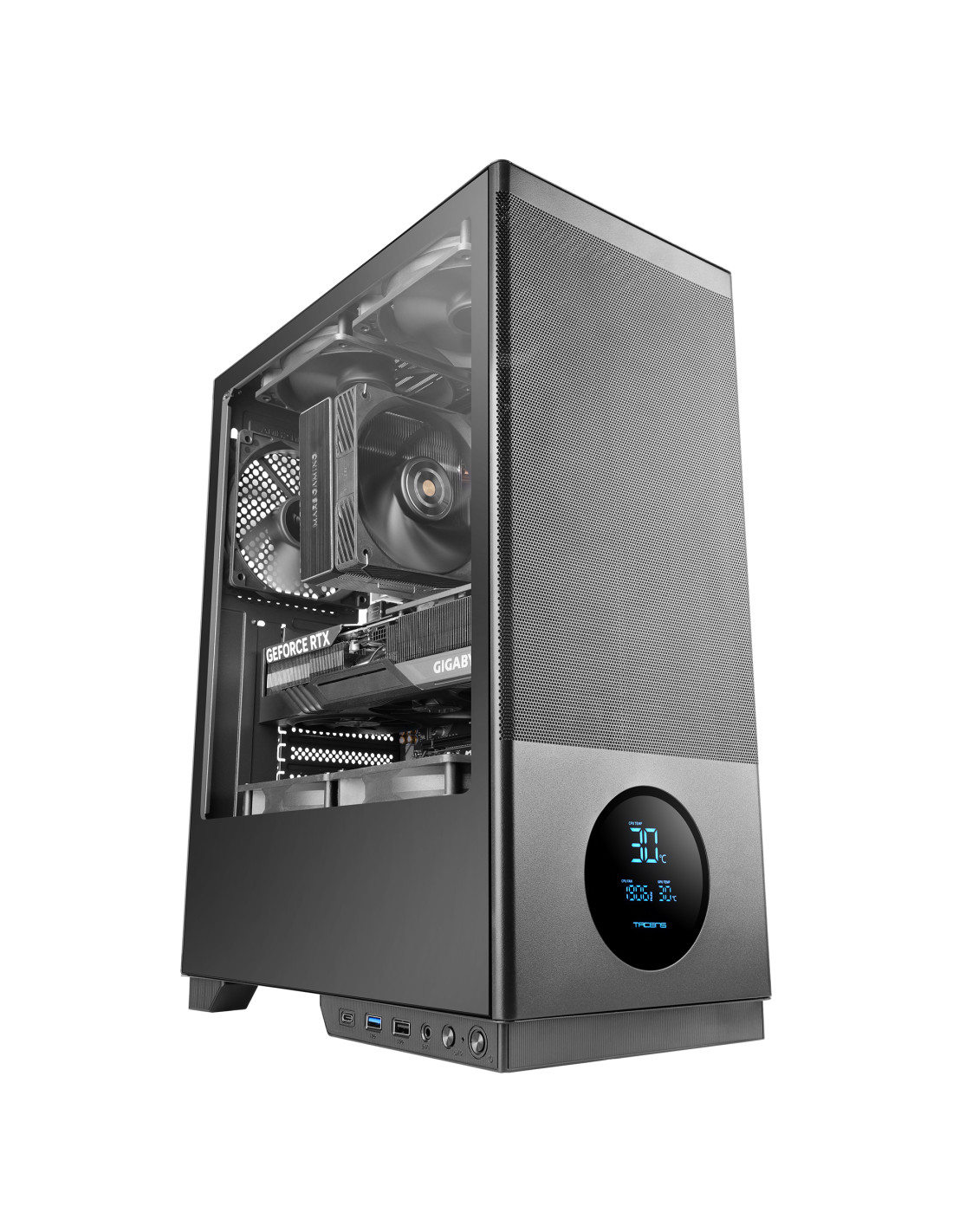
SAGITTA20
| Weight | 3.91Kg |
|---|---|
| Dimensions | 450x190x340mm |
| Size | Mid-tower |
| Fan capacity | Top 2x 120mm or 2x 140mm / Bottom 2x 120mm / Rear 1x 120mm |
| Ports | USB3.0 x1 / USB2.0 x1 / USB-C x1 (USB3.0 data transfer speed) / HD Audio + Mic (combined) |
| Power supply support | ATX |
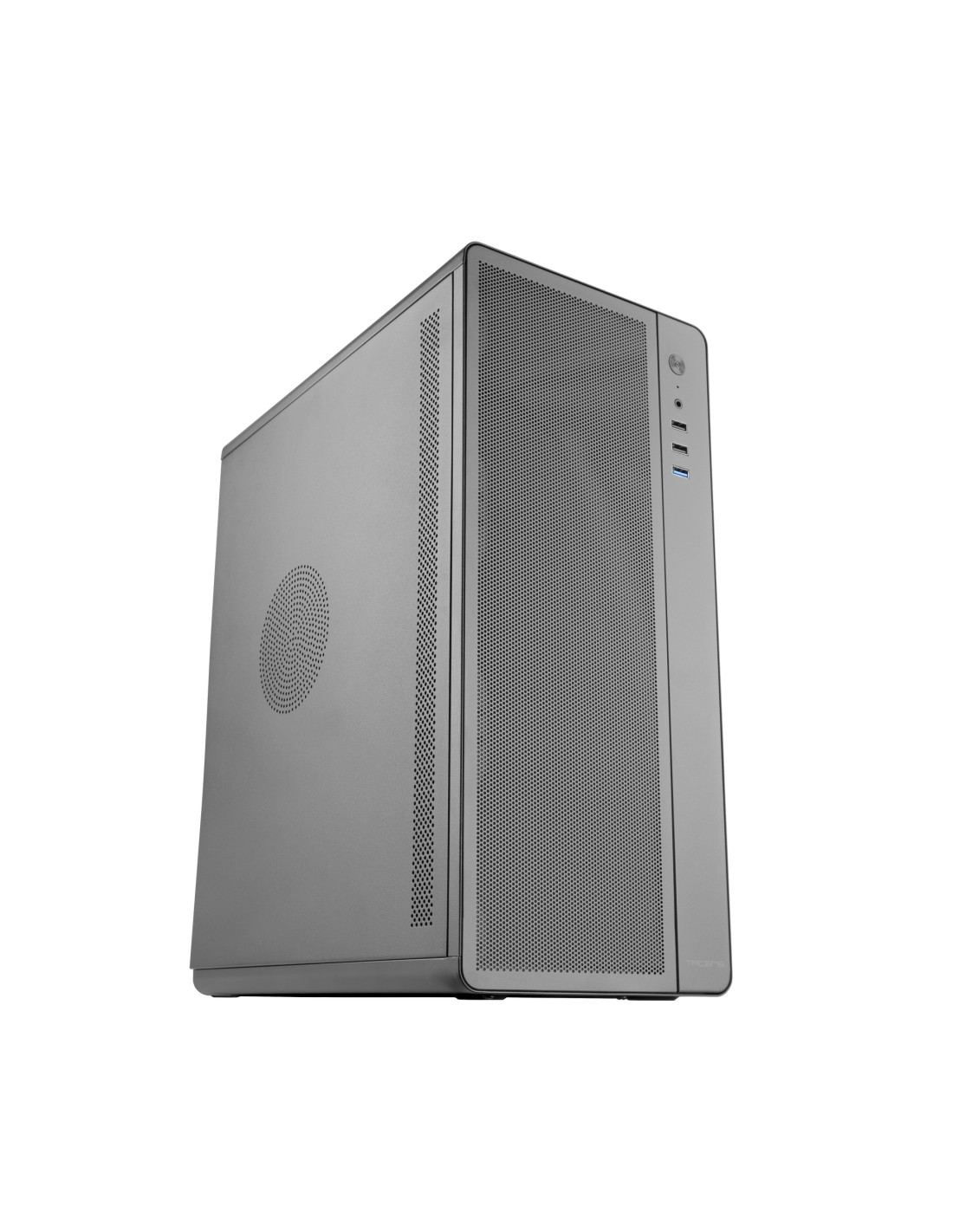
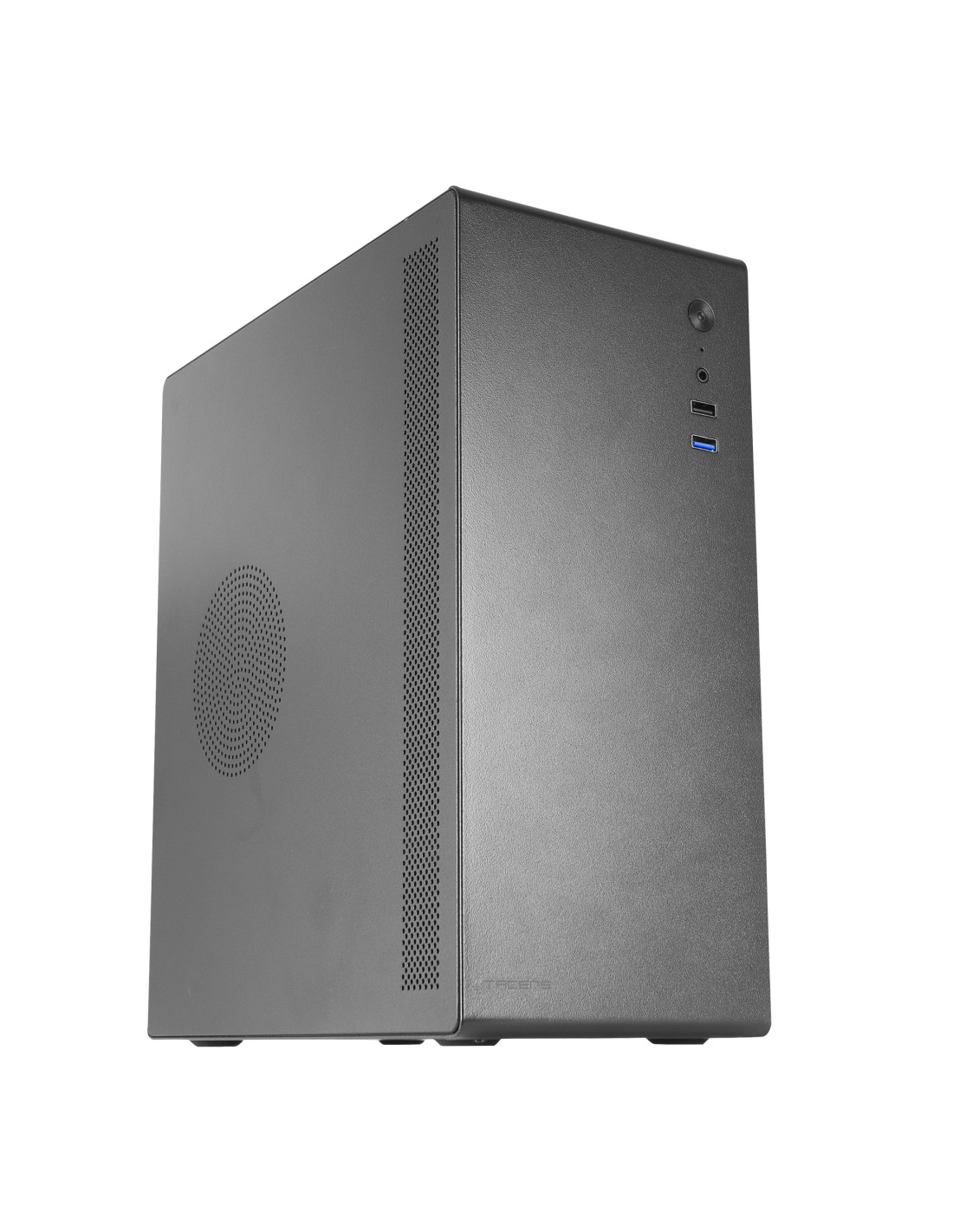
NOVAX550BR
| Weight | 3437g |
|---|---|
| Dimensions | 356x166x275mm |
| Size | Mini-tower |
| Fan capacity | Rear: 1x 80mm |
| Ports | USB3.0 x1 / USB2.0 x1 / HD Audio + Mic (combined) |
| Power supply support | ATX |
FAQs
Can you add a magnetic filter to an aluminium or plastic case?
Not directly, because the magnet will not stick to aluminium or ABS plastic. To use magnetic filters on those materials, you must first stick 0.5 mm self-adhesive steel strips onto the grille frame.
How often should you clean a dust filter?
In standard domestic environments, cleaning every 30 or 45 days is recommended. If the tower sits on the floor less than 10 cm from the surface, maintenance should be carried out every 15 or 20 days.
Does a dust filter significantly reduce liquid cooling performance?
A dust mesh placed directly in front of a 240 mm or 360 mm radiator adds a resistance that can raise the coolant temperature between 2 °C and 4 °C. For this reason, radiators should use fans with static pressure above 1.8 mmH2O.
Technical verdict
The best: Magnetic filters allow complete removal and cleaning in under 5 s without moving the tower.
The worst: They lose grip if the chassis is made of aluminium or plastic, and the magnet degrades under sustained heat above 60 °C.
Buy it if: You want to speed up monthly maintenance and your case has a steel structure with 120 mm or 140 mm intakes.
Don't buy it if: Your chassis lacks steel panels; in that case, go for traditional snap-in or rail filters.