
Shopping Cart
There are no more items in your cart
 Español
 English
 Português PT
 Français
 Italiano
 Deutsch
 اللغة العربية
In short: A standard liquid cooling radiator needs a minimum static pressure of 1.5 mmH2O to dissipate heat properly, reaching an optimal value from 2.0 mmH2O in high fin-density models.
Table of contents
- What static pressure does a radiator need according to its density?
- What is the difference between airflow (CFM) and static pressure (mmH2O)?
- How does the 120 mm versus 140 mm size affect performance?
- Technical criteria for choosing radiator fans
- Technical comparison of cooling fans
- What are the most common mistakes when ventilating a radiator?
- How to calculate effective pressure in push-pull configurations?
- Ventilation options and technical catalogue
- Frequently asked questions about static pressure in radiators
What static pressure does a radiator need according to its density?
The aerodynamic resistance of a radiator determines the force the fan must exert to push air through its aluminium or copper fins. Radiator density is measured in fins per inch (FPI or Fins Per Inch):
- Low-density radiators (less than 14 FPI): Require a minimum of 1.2 mmH2O to maintain continuous airflow.
- Standard radiators (between 14 FPI and 18 FPI): Need between 1.5 mmH2O and 2.0 mmH2O at a speed of 1200 RPM or higher.
- High-density radiators (more than 20 FPI): Demand values above 2.2 mmH2O to prevent air from bouncing off the front of the core.
If a fan delivering less than 1.0 mmH2O is fitted to a standard radiator, the effective airflow drops by up to 60%, causing direct thermal build-up in the coolant.
What is the difference between airflow (CFM) and static pressure (mmH2O)?
Airflow, measured in CFM (cubic feet per minute), indicates the total volume of air moved in open spaces free of mechanical obstructions. By contrast, static pressure, measured in mmH2O (millimetres of water column), represents the force exerted by the fan to overcome physical resistances such as dense dust filters, grilles and radiators.
Airflow and static pressure are not interchangeable: a fan with 70 CFM and only 0.8 mmH2O scatters air sideways when it hits the fins, losing effectiveness. A pressure-optimised model, on the other hand, focuses the air cone in a straight line perpendicular to the dissipation surface.
How does the 120 mm versus 140 mm size affect performance?
The fan diameter alters the relationship between airflow, generated pressure and noise emissions:
- 120 mm fans: Feature a more compact blade design that makes it easier to reach high static pressures of 1.47 mmH2O or more at 1200 RPM. They are the most common format in liquid cooling.
- 140 mm fans: Move more air volume at a lower speed, producing less noise than a 120 mm unit at equal airflow, although they usually require wider blades to match the concentrated pressure of smaller frames.
Technical criteria for choosing radiator fans
Before selecting a fan for a cooling block, the following parameters should be assessed:
- Blade geometry and count: Models with 7 to 9 wide blades and little spacing between them seal pressure better against the 25 mm thick outer frame.
- Operating noise level: An efficient fan should deliver its working pressure below 20 dBA to maintain a quiet acoustic profile.
- Power consumption: Typical current values range between 0.12 A and 0.15 A on standard 12 V lines.
- Regulations and certifications: It is vital to distinguish legal compliance from quality control. CE marking, the RoHS directive and the WEEE label are mandatory declarations for selling in the European Union and do not certify performance. Voluntary, independent certifications are what guarantee specific parameters: 80 PLUS (CLEAResult) or Cybenetics ETA for energy efficiency, and Cybenetics LAMBDA for acoustic emissions.
Technical comparison of cooling fans
The following table brings together technical specifications for fans of various sizes and purposes:
| Model | Dimensions | Speed | Airflow | Static pressure | Noise level | Current | Blades |
|---|---|---|---|---|---|---|---|
| AF12 | 120x120x25 mm | 1200 RPM (+10%) | 48.12 CFM | 1.47 mmH2O | 14 dBA | 0.15 A | 9 |
| AURAII12 | 120x120x25 mm | 1200 RPM | 50.00 CFM | N/A | N/A | N/A | 7 |
| AF8 | 80x80x25 mm | 1800 RPM (+10%) | 30.50 CFM | 1.25 mmH2O | 14 dBA | 0.12 A | 7 |
| AURAII9 | 90x90x25 mm | 1350 RPM | 33.00 CFM | N/A | N/A | N/A | 7 |
| AURAII8 | 80x80x25 mm | 1500 RPM | 25.00 CFM | N/A | N/A | N/A | 7 |
What are the most common mistakes when ventilating a radiator?
- Choosing on CFM alone: Buying fans designed for case extraction (high airflow with no resistance) causes the air to stall outright against a radiator 27 mm or 38 mm thick.
- Ignoring air leaks at the frame: Fitting fans with circular frames or side openings reduces effective pressure by up to 25% as the flow escapes around the edges instead of crossing the fins.
- Confusing legal conformity with quality seals: Treating CE marking or RoHS as a guarantee of high cooling performance is a technical mistake; they are legally binding safety and materials regulations.
- Controlling speed with unsuitable thermal curves: Adjusting fans according to momentary CPU spikes rather than coolant temperature generates unnecessary acoustic oscillations.
How to calculate effective pressure in push-pull configurations?
Mounting fans on both sides of the radiator (push-pull mode) increases overall pressure, overcoming internal resistance without raising individual speeds. By pushing and pulling simultaneously, the combined static pressure does not double in an exactly linear fashion due to internal turbulence, yielding roughly 80% of the theoretical sum.
For example, 1.47 mmH2O + 1.47 mmH2O = 2.94 mmH2O, and 2.94 mmH2O × 0.8 = 2.35 mmH2O in an effective push-pull configuration.
This increase allows two 1200 RPM, 14 dBA fans to dissipate the same thermal load as a single fan spinning at 1900 RPM with more than 28 dBA of noise.
Which catalogue options suit each need?
The Tacens catalogue offers solutions geared towards thermal and acoustic balance depending on position within the chassis:
- For compact radiators and narrow heatsinks: The AF12 model delivers a static pressure of 1.47 mmH2O with an airflow of 48.12 CFM and a 120x120x25 mm frame. Weighing 120 g, its 9 blades channel the flow while keeping noise at just 14 dBA and consumption at 0.15 A.
- For tight spaces: The AF8 fan, in an 80x80x25 mm format weighing 60 g, offers 1.25 mmH2O of static pressure, 30.5 CFM at 1800 RPM and 14 dBA of noise, suitable for small-format radiators.
- For unrestricted case airflow: The AURAII12 (50 CFM at 1200 RPM) and AURAII9 (33 CFM at 1350 RPM) units maximise air renewal volume inside the chassis. If you are after overall system efficiency, the Radix PSU range carries Gold certification to minimise residual heat inside.
Products mentioned
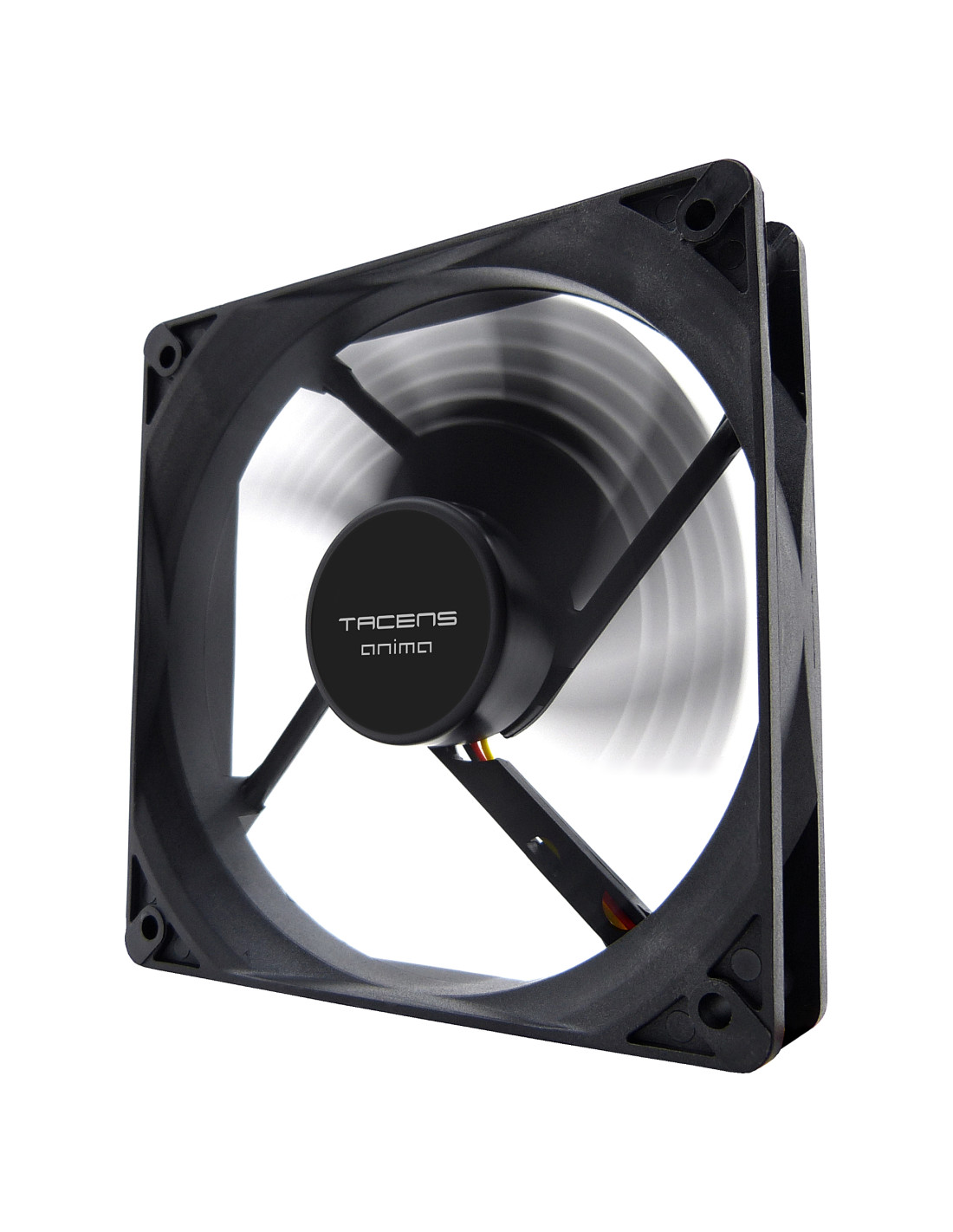
AF12
| Weight | 120g |
|---|---|
| Dimensions | 120x120x25mm |
| Speed | 1200 RPM +10% |
| Airflow | 48.12CFM |
| No. of blades | 9 |
| Noise | 14dBA |
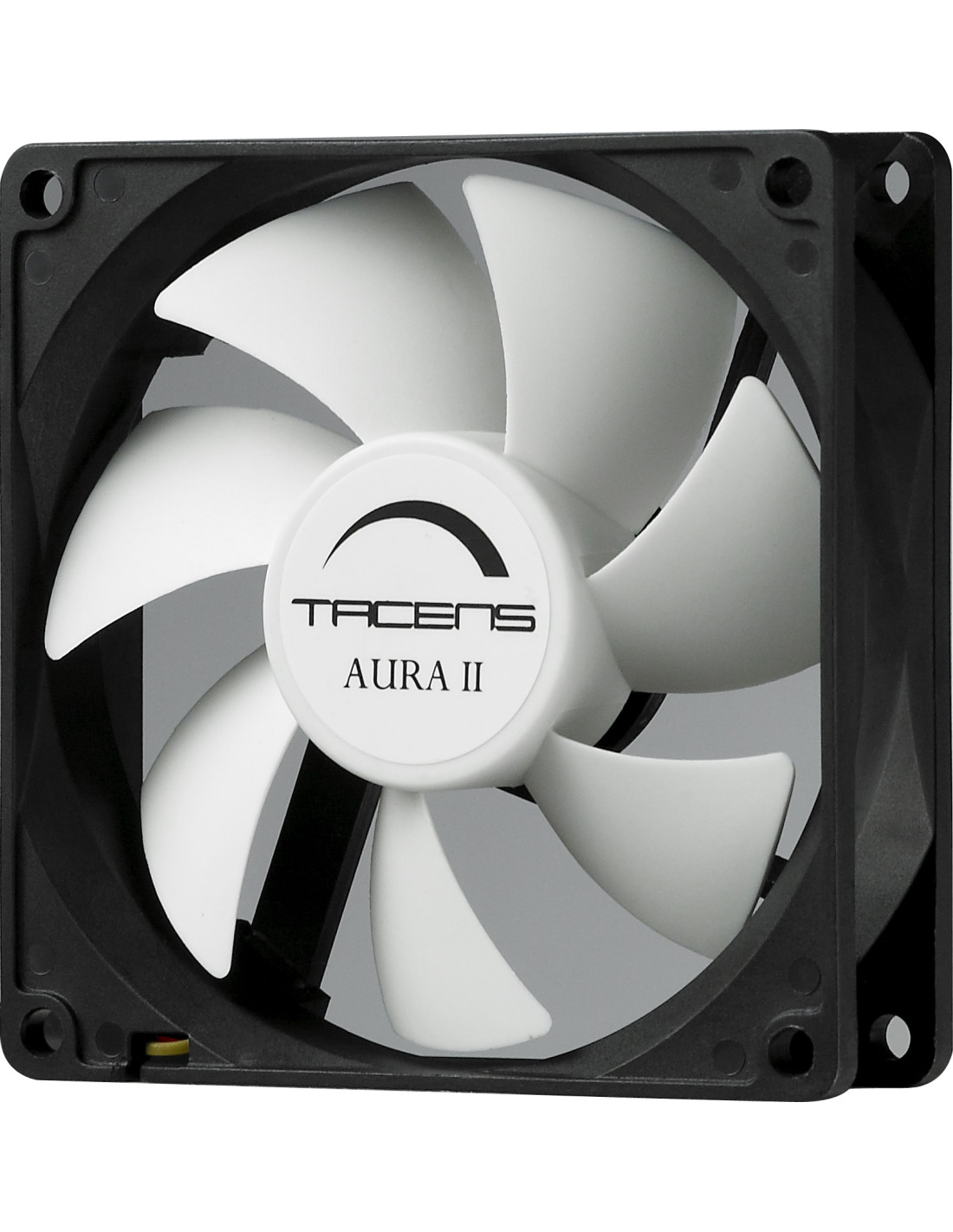
AURAII12
| Weight | 5g 98 |
|---|---|
| Dimensions | 120x120x25mm |
| Speed | 1200 RPM |
| Airflow | 50CFM |
| No. of blades | 7 |
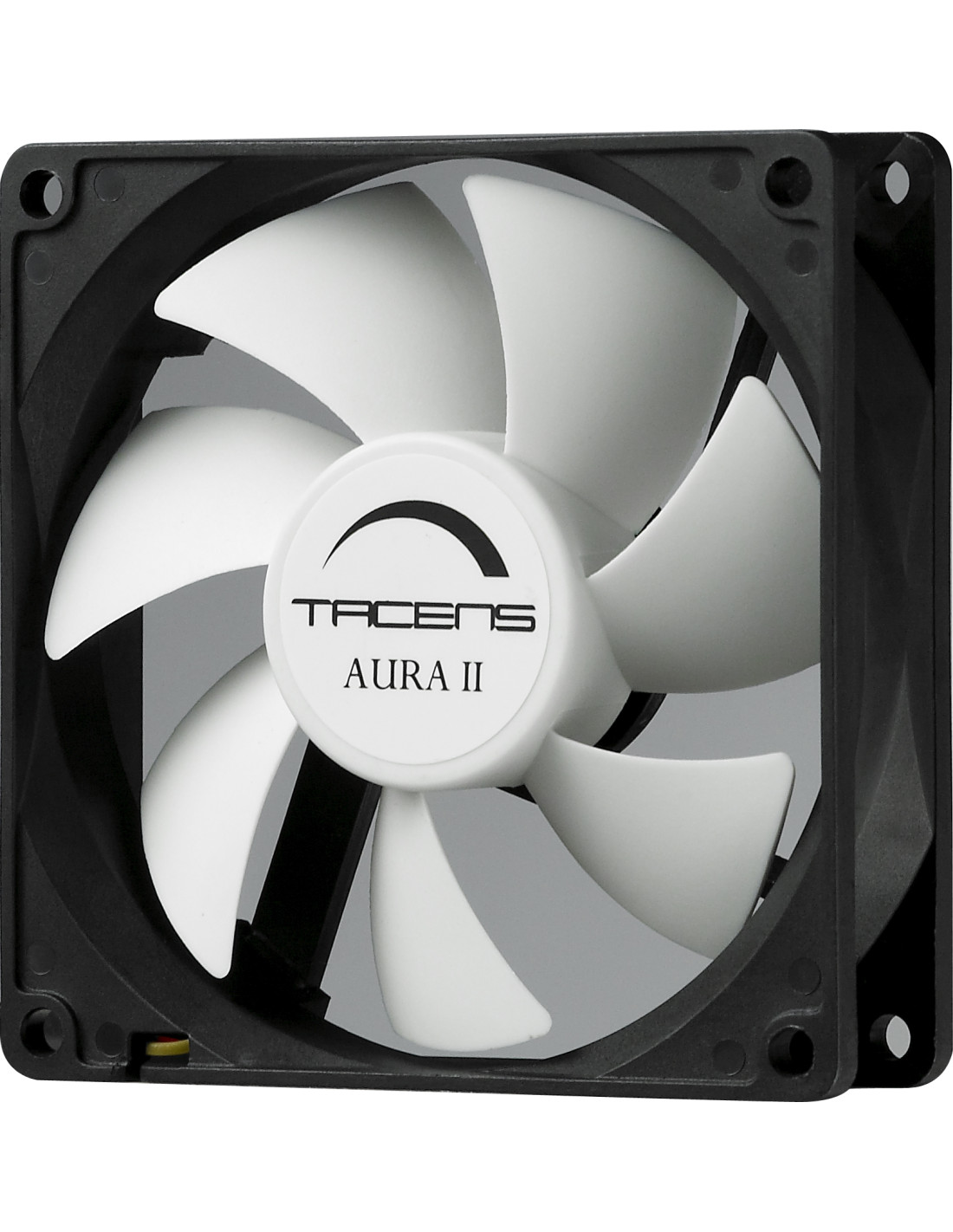
AURAII9
| Weight | 9g 89 |
|---|---|
| Dimensions | 90x90x25mm |
| Speed | 1350 RPM |
| Airflow | 33CFM |
| No. of blades | 7 |
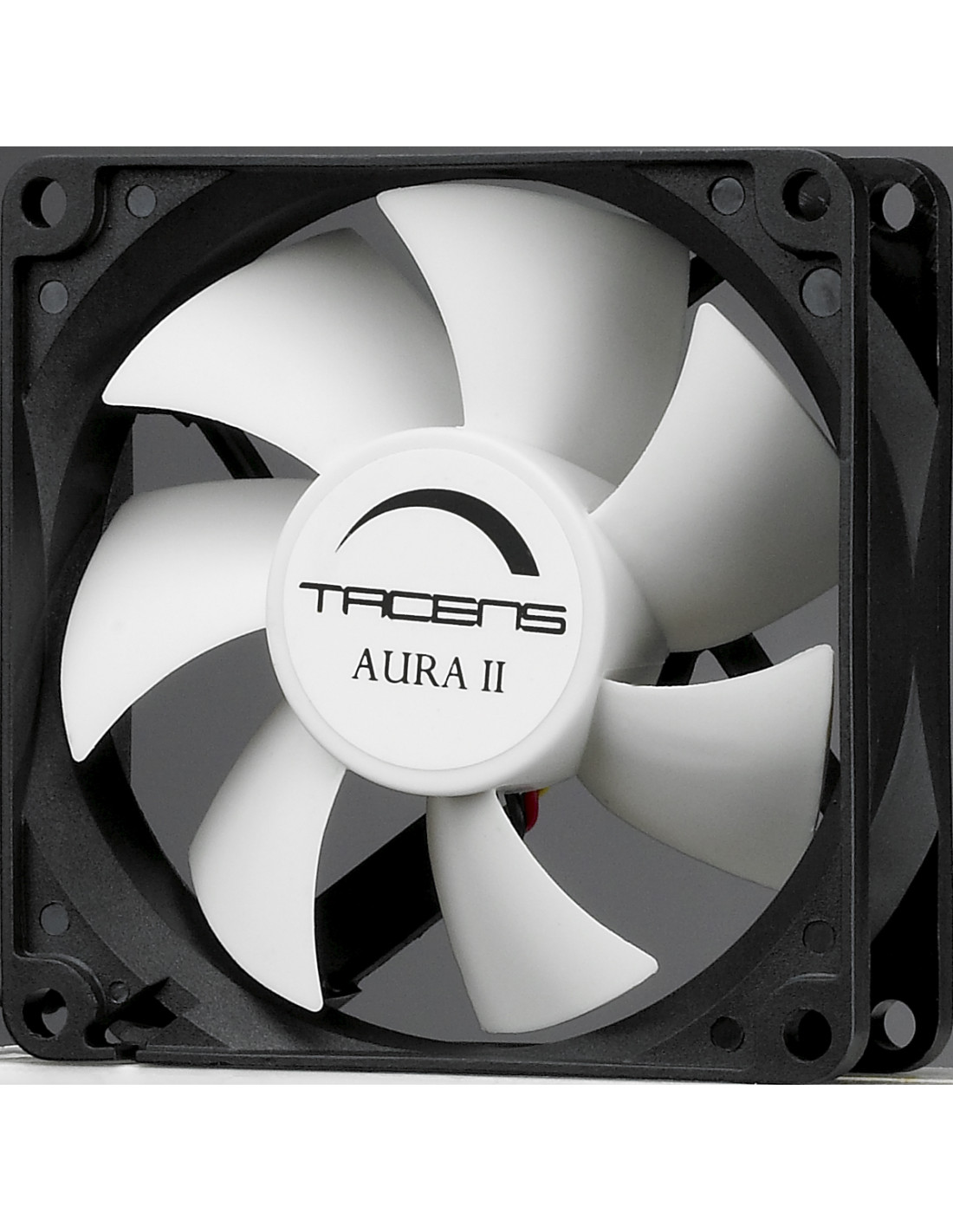
AURAII8
| Weight | 2g 64 |
|---|---|
| Dimensions | 80x80x25mm |
| Speed | 1500 RPM |
| Airflow | 25CFM |
| No. of blades | 7 |
Frequently asked questions about static pressure in radiators
Is a pressure of 1.0 mmH2O enough for a radiator?
It falls short for medium- or high-density radiators, as airflow drops sharply when crossing the thickness of the metal. Fans delivering at least 1.4 mmH2O or 1.5 mmH2O are recommended to ensure stable heat transfer.
Does fan thickness affect static pressure?
Yes, standard 25 mm thick fans generate a superior pressure cone compared with low-profile 15 mm models. The larger blade size allows air to be pushed with more torque without losing speed.
What happens if I fit a high-airflow (CFM) fan to a radiator?
The fan will move a great deal of air around the radiator, but the flow that actually manages to pass through the fins will be minimal. This causes the coolant temperature to rise by between 5 °C and 10 °C compared with a pressure-optimised model.
The best: Provides the air force needed (from 1.5 mmH2O) to push through dense radiators while maintaining stable temperatures at low speeds.
The worst: Fans optimised for static pressure tend to deliver a slightly lower free-air flow (CFM) than pure case fans.
Buy it if: You are going to cool a liquid cooling radiator or an air heatsink with high fin density and want low noise.
Don't buy it if: You only need to renew the general air in the chassis through open grilles without filters; in that case, use high-airflow CFM fans.